
By Anna Tingelstad
One of the most commonly neglected factors in achieving consistent fitness progress is recovery. Many people assume that increasing workout intensity always leads to faster strength gains or fat loss. While pushing your limits can drive results, failing to recover properly can slow progress and increase the risk of injury.
When you engage in intense exercise, your body activates the hypothalamic-pituitary-adrenal (HPA) axis—a system that regulates your stress response. This process triggers the release of adrenaline and cortisol, hormones that help mobilize energy so you can perform at a high level. However, this response is designed to be temporary.
If the body remains in a prolonged stress state, cortisol and adrenaline stay elevated longer than they should. This can interfere with sleep, slow muscle repair, and increase fatigue. Over time, it may lead to decreased performance, reduced motivation, and a higher risk of injury.
Many people mistake constant soreness and exhaustion for progress. In reality, these are often signs that the body is not fully recovering. True progress happens when the body has enough time and resources to repair and rebuild.
Why Recovery Is Essential for Performance
Recovery allows the body to repair muscle tissue, restore energy levels, and regulate hormones. Without adequate recovery, the body remains in a stressed state, making it harder to build strength, improve endurance, or lose fat effectively. Balanced training and recovery create the conditions for long-term progress. When recovery is prioritized, workouts become more productive, energy levels improve, and the risk of burnout decreases.
How Red Light Therapy Supports Recovery
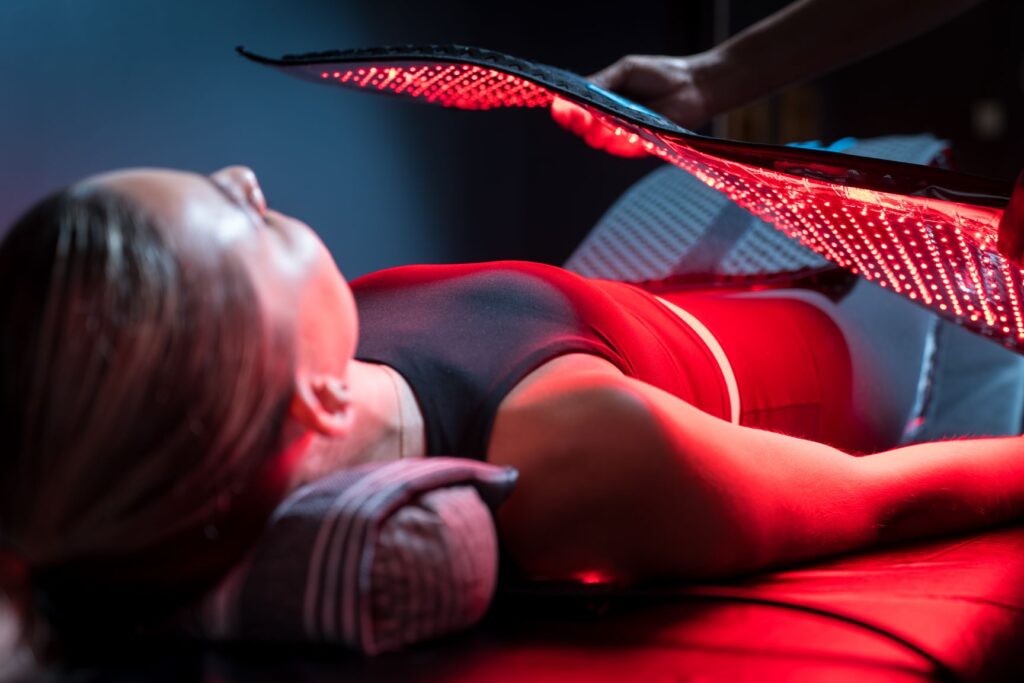
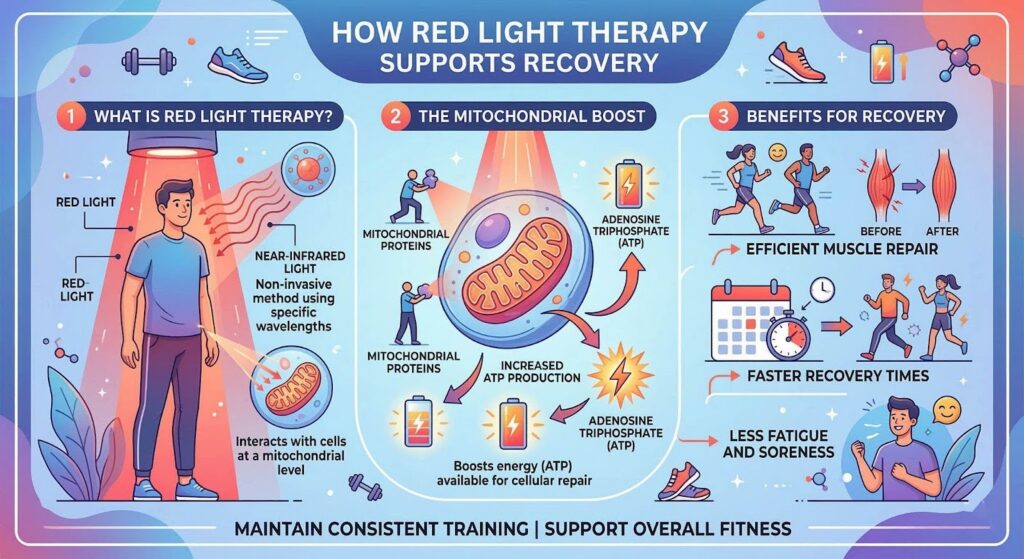
Red light therapy is a non-invasive method used to support recovery and cellular repair processes. It works by exposing the body to specific wavelengths of light that interact with cells at a mitochondrial level. Research indicates that mitochondrial proteins respond to red and near-infrared light, helping increase the production of adenosine triphosphate (ATP), the energy source used by cells. With more energy available, cells can repair damage more efficiently after exercise. This process helps the body recover faster, making it easier to maintain consistent training without excessive fatigue or soreness.
What happens if your body stays in a constant stress state after workouts?
When the body remains in a prolonged stress response, cortisol and adrenaline stay elevated. This can interfere with sleep, slow muscle repair, and increase fatigue. Over time, it can reduce performance and make progress harder to sustain.
Key Benefits of Red Light Therapy
Enhanced Cellular Energy Production
Red light therapy stimulates mitochondrial activity, increasing ATP production. This added energy supports essential processes such as cell repair, regeneration, and overall tissue health. As a result, individuals often experience improved energy levels during workouts and throughout the day.
Faster Muscle Recovery
Increased cellular energy allows the body to repair muscle fibers more efficiently and clear metabolic waste products that build up during exercise. Improved cellular function supports stronger muscle tissue and may reduce the likelihood of strain or overuse injuries.
Reduced Inflammation
Exercise naturally creates inflammation, which is necessary for muscle adaptation. However, prolonged inflammation can slow recovery and increase discomfort. Red light therapy supports improved blood and lymphatic circulation, helping deliver oxygen and nutrients more efficiently while reducing oxidative stress and inflammatory markers.How does red light therapy improve muscle recovery?
Red light therapy enhances mitochondrial activity, increasing the energy available for cellular repair. It also improves circulation, helping deliver oxygen and nutrients to damaged tissues. This combination supports faster recovery and reduced soreness.
Can red light therapy help reduce post-workout inflammation?
Yes, specific wavelengths of red and near-infrared light support circulation and reduce oxidative stress. This helps lower inflammation levels and promotes a faster return to normal tissue function after exercise.
A Smarter Approach to Training
Training harder is not always the answer—recovering smarter is what drives consistent results. Persistent soreness, poor sleep, and lack of motivation are often early signs that recovery is being overlooked. Recovery is also not instant. Many individuals begin to notice improvements in soreness, energy levels, and performance after several sessions, rather than a single treatment. Consistency is key to maximizing results. By supporting the body’s natural repair processes, red light therapy can help shift the body out of a constant stress state and back into a “rest and rebuild” mode where real progress happens.
Make Recovery Part of Your Routine
Life is demanding, and it’s not always easy to prioritize recovery. However, without it, even the most intense workouts can lead to diminishing returns. Avoid stalled progress by giving your body dedicated time to recover and rebuild. Support faster recovery so you can train consistently without burning out. Reduce soreness and return to your workouts feeling stronger—not depleted. Take 25 minutes to reset your body, support cellular repair, and give yourself the foundation for better performance.