
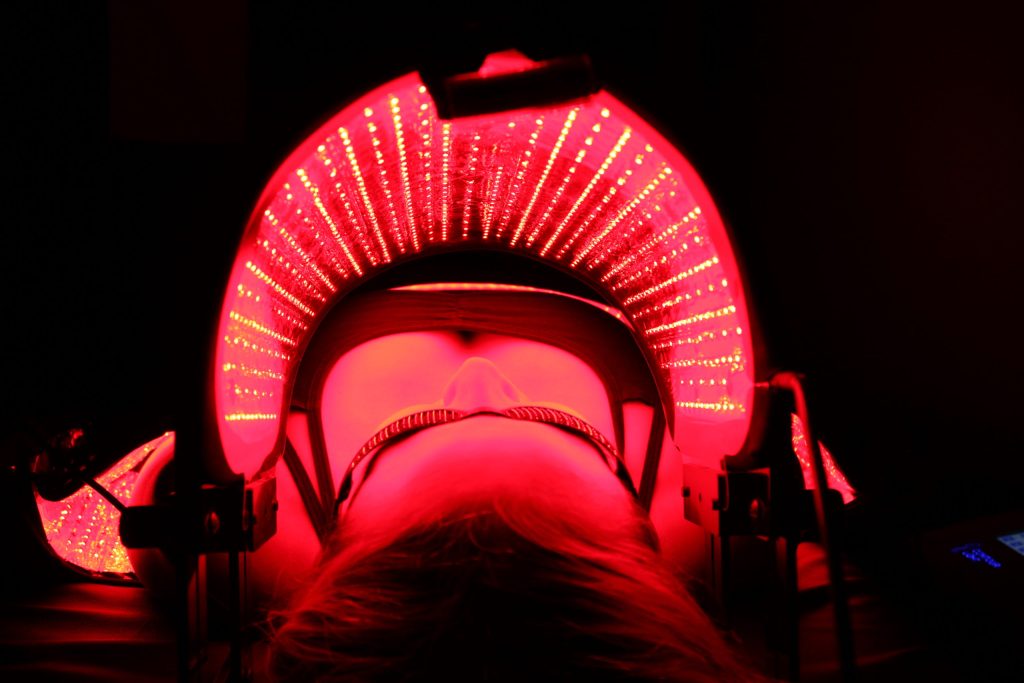
1. What Is Red Light Therapy for Vision — And Does It Actually Work?
Quick Answer: Red light therapy for vision (photobiomodulation / PBM) uses specific wavelengths — most commonly 670nm — to stimulate mitochondrial energy production in retinal cells, potentially slowing age-related vision decline, supporting macular health, and reducing myopia progression.
I’ve spent years working with clients who assume that declining vision is simply part of getting older — something to manage, not address. What we’ve come to understand at our clinic is that the retina ages faster than almost any other organ in the body, and that much of that decline is driven by something we can actually influence: mitochondrial function.
The retina’s photoreceptor cells — the rods and cones that convert light into visual signals — are among the most energy-hungry cells in the human body. As we age, the mitochondria powering them become less efficient, oxidative stress builds up, and visual clarity gradually fades. For a long time, we accepted this as inevitable. Research into photobiomodulation (PBM) has changed that view entirely. Targeted exposure to low-level red and near-infrared light can re-energize those mitochondria, reduce oxidative damage, and help preserve the vision our clients depend on.
nm optimal wavelength for retinal mitochondria
weekly sessions in leading clinical protocols
minutes per session (standard dosing)
peer-reviewed studies on PBM and eye health
2. How Does Red Light Therapy Work for Eye Health?
When I explain this to clients, I always start with the same question: what actually powers your vision? The answer is mitochondria — and when they decline, so does sight. Red and near-infrared photons penetrate ocular tissue and are absorbed by cytochrome c oxidase (CCO) — the final enzyme in the mitochondrial electron transport chain. Think of it as flipping a switch that recharges the retina’s power supply.
The Cellular Cascade
- Photon absorption — 670nm light is absorbed by cytochrome c oxidase in retinal mitochondria
- ATP production boost — Stimulated CCO increases cellular energy output (adenosine triphosphate)
- Reduced oxidative stress — PBM lowers reactive oxygen species (ROS) that damage photoreceptors
- Anti-inflammatory effects — Reduced inflammation supports long-term retinal structural integrity
- Neuroprotection — Improved mitochondrial function supports survival of retinal ganglion cells
The science that genuinely convinced our team came from a 2021 study out of University College London — a single 3-minute morning exposure to 670nm light produced significant improvements in color contrast sensitivity in adults over 40, lasting a full week. That’s the kind of result that changes how we think about eye care.
What makes the eye so uniquely responsive is that the retina’s photoreceptors and RPE cells are denser in mitochondria than almost any other tissue in the body. In our experience working with clients, this is exactly why we see such consistent responses with properly applied red light protocols.
3. Eye Conditions Red Light Therapy May Help
Over the years, I’ve seen our clients benefit across a range of conditions — and the clinical literature continues to grow to match what we observe in practice. We always emphasize that red light therapy is a powerful complement to conventional care, not a replacement for it.
Age-Related Macular Degeneration (AMD)
Multiple RCTs show 670nm PBM slows AMD progression in early-to-intermediate stages by supporting RPE and photoreceptor mitochondrial function.
Myopia Progression
Repeated low-level red light (RLRL) in children has been shown in Asian clinical trials to significantly slow myopia progression and axial elongation.
Diabetic Retinopathy
Early research suggests PBM reduces retinal inflammation and oxidative damage in diabetic patients, potentially slowing disease progression.
Glaucoma
PBM may protect retinal ganglion cells — the cells lost in glaucoma — by improving mitochondrial function and reducing apoptotic cell death.
Age-Related Contrast Sensitivity
A landmark UCL study showed 3-minute 670nm morning exposure significantly improved color contrast sensitivity in adults over 40.
Dry Eye & Ocular Surface Health
Some research indicates PBM may improve meibomian gland function and reduce dry eye symptoms, though larger trials are needed.
Age-Related Macular Degeneration (AMD)
AMD is one of the conditions I feel most strongly about addressing early, because by the time symptoms are obvious, significant damage has often already occurred. A 2020 pilot study published on PubMed/PMC found that early-stage AMD patients receiving regular 670nm light therapy showed measurable improvement in retinal sensitivity and slower disease progression. At our clinic, we’ve made early AMD intervention a priority protocol.
Myopia in Children
As a parent myself, this is the condition that hits closest to home. Watching children’s prescriptions worsen year after year feels helpless — but it doesn’t have to be. A landmark 2022 multicenter RCT by Jiang et al. (Ophthalmology) found that children aged 6–16 receiving low-level red light therapy twice daily experienced 69% less myopia progression compared to spectacles alone. We now actively recommend this protocol to families we work with, under proper clinical supervision.
Diabetic Retinopathy
Many of our clients managing diabetes come to us worried about their eyes. Research published in Frontiers in Ophthalmology (2024) — PBM in ophthalmology supports PBM as a way to reduce retinal inflammation and oxidative stress in this population. I always stress that this works best as an early, preventive strategy — before damage progresses.
4. Recommended Usage Protocol
One of the most common questions I get is: ‘How do I actually use this?’ Our protocols are grounded in the most widely cited clinical parameters, and I’ll walk you through exactly what we recommend:NM WAVELENGTH
MINS PER SESSION
PER WEEK
MORNING USE
Timing: Morning Sessions Perform Better
I tell every client the same thing: do your session before your first coffee. The UCL 2021 study confirmed what we’d observed anecdotally — morning exposure within an hour of waking produces the strongest results. This appears to relate to circadian fluctuations in mitochondrial membrane potential, which is more receptive to light stimulation earlier in the day. We’ve built morning timing into every protocol we recommend.
Consistency Is Key
This is something I’m very upfront about with new clients: red light therapy is not a quick fix. Most clinical trials run 3 to 12 months before measuring outcomes, and the benefits are cumulative. What I tell people is this — think of each session as a small deposit into your eye health account. Stay consistent, and the returns are real. Our longest-term clients have seen sustained improvements that continue to build over years.
5. Safety: What You Need to Know
Important Safety Notice
Always use a device specifically designed and tested for ocular use. Standard red light panels for skin or muscle recovery are not appropriate for direct eye exposure. Consult an ophthalmologist or optometrist before beginning any ocular light therapy protocol.
Safe When Used Correctly
Safety is something we take seriously at our clinic, and it’s the first conversation I have with every new client. When administered at the correct wavelength, irradiance, and duration with an approved device, red light therapy for eyes has a strong safety record across peer-reviewed studies. The risks come from misuse — wrong devices, wrong exposure times, or skipping professional guidance. That’s why we personally guide every client through their protocol.
- Use only devices designed and tested for ocular photobiomodulation
- Strictly follow manufacturer-recommended exposure times — do not exceed them
- Do not use high-intensity lasers or UV-emitting devices near the eyes
- Consult an eye care professional if you have any existing retinal condition
- Children using RLRL therapy for myopia must be supervised by a clinician
When recommending devices to our clients, we only work with products that align with the FDA’s General Wellness Policy for Low Risk Devices and, where applicable, IEC 60825-1 international laser safety standards. I’d encourage anyone researching devices independently to check compliance before purchasing.
6. Frequently Asked Questions
Can red light therapy actually improve vision?
In my experience, it’s most accurate to say that red light therapy helps preserve and protect the retinal health you have, and may slow age-related decline. Our clients with AMD and myopia have seen the strongest results. One thing I always clarify: it won’t change your prescription or correct refractive errors — but it can support the underlying cellular health that affects how well your eyes function.
What wavelength of red light is best for eye health?
In our protocols, we use 670nm as our standard — it’s the most researched and most consistently effective wavelength for retinal photobiomodulation. Some of the devices we work with also incorporate near-infrared wavelengths in the 810–850nm range for added depth of penetration.
How often should I use red light therapy for my eyes?
Our standard recommendation is 3-minute sessions, 3 times per week — and always in the morning. For clients managing AMD, we sometimes move to daily sessions depending on their stage and goals. I always say: follow your device’s clinical guidelines and check in with your eye care provider, especially when starting out.
Is red light therapy safe to use on the eyes?
Yes — and I say this with confidence because the evidence supports it. When you use a device designed specifically for ocular use, at the correct irradiance and for the right duration, the safety profile is excellent. What I caution clients against is buying unregulated devices or self-prescribing exposure times without guidance. That’s where the risk lies.
Can red light therapy help children with myopia?
Yes. The Jiang et al. 2022 multicenter RCT (Ophthalmology) showed a 69% reduction in myopia progression in children aged 6–16. All pediatric use should be supervised by a licensed eye care professional.
Does time of day matter for red light therapy?
Yes — morning use is preferred. The UCL 2021 study found that sessions within an hour of waking produced the strongest improvements in visual sensitivity.
References
The following peer-reviewed studies and authoritative sources directly informed the content of this article. I encourage you to read them directly — the science behind red light therapy for vision is both robust and fascinating:
- Shinhmar H., Jeffery G. et al. — Weeklong improved colour contrast sensitivity after single 670nm exposures. Scientific Reports, 2021
- Grewal M.K., Jeffery G. et al. — Effects of 670nm photobiomodulation in healthy ageing and AMD (pilot study). PMC / J Clin Med, 2020
- Jiang Y. et al. — Effect of repeated low-level red-light therapy for myopia control in children. Ophthalmology, 2022
- Valter K. et al. — Photobiomodulation in ophthalmology: bench to bedside. Frontiers in Ophthalmology, 2024
- American Academy of Ophthalmology — Macular Degeneration Overview
- National Eye Institute — Age-Related Macular Degeneration
- National Eye Institute — Diabetic Retinopathy
- FDA — General Wellness Policy for Low Risk Devices
- PubMed — Photobiomodulation and Retinal Health (full search)
This article is for informational purposes only and does not constitute medical advice. Consult a qualified healthcare provider before beginning any new health regimen.